
Chatbots like ChatGPT, Claude, and even Character.AI are gaining a lot of popularity with many people engaging with them on the daily.
How can businesses also leverage this technology?
Here are some key stats for business leaders to figure out how you can use these AI tools to your advantage.
On this page
- Key Chatbot Statistics: Editor’s Choice
- Chatbot Adoption Statistics
- How Effective Are Chatbots?
- Statistics on Customer Expectations and Preferences From Chatbots
- AI Chatbot Statistics
- How Do Customers Feel About AI Chatbots?
- Facebook Announced That Its Bot Platform Has Been Used to Create 300,000 Bots
- Statistics on Chatbot Challenges
- So What’s The Future of Chatbots?
Key Chatbot Statistics: Editor’s Choice
1. 16% of businesses use a chatbot already.
2. 24% of businesses that use AI chatbots have excellent ROI.
3. 45% of Americans do not want chatbot companies to store their health information. (Consumer Reports, 2024)
4. A 5-minute delay in response increases the risk of site visitors leaving by 10x.
5. 19% of businesses want to use chatbots for 24/7 availability.
Chatbot Adoption Statistics
Let’s look at some chatbot statistics on connecting industries and businesses with their chatbot usage.
Which Industry Uses Chatbots the Most?
Based on an insider report from Chatbots Life, real estate is the top industry for chatbots, followed by travel and education.
The Global Chatbot Market Size Is Estimated to Grow at a CAGR of 23.3% From 2023 to 2030
According to Grand View Research, the market size was around $5,132.8 million in 2022.
10% of Businesses Use Chatbots Daily
Here are some statistics from Tidio:
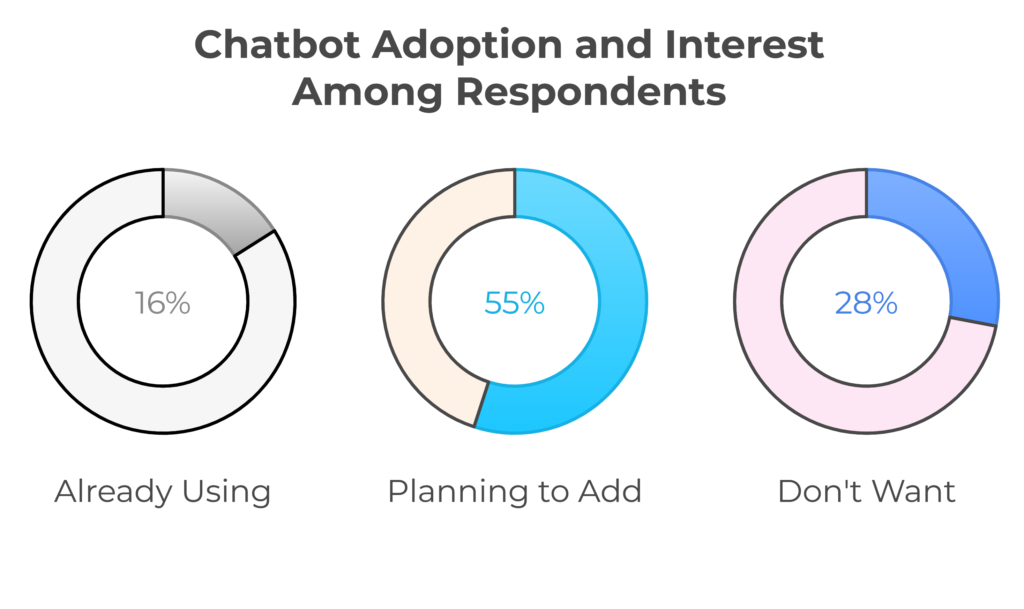
1. 16% of businesses use a chatbot already.
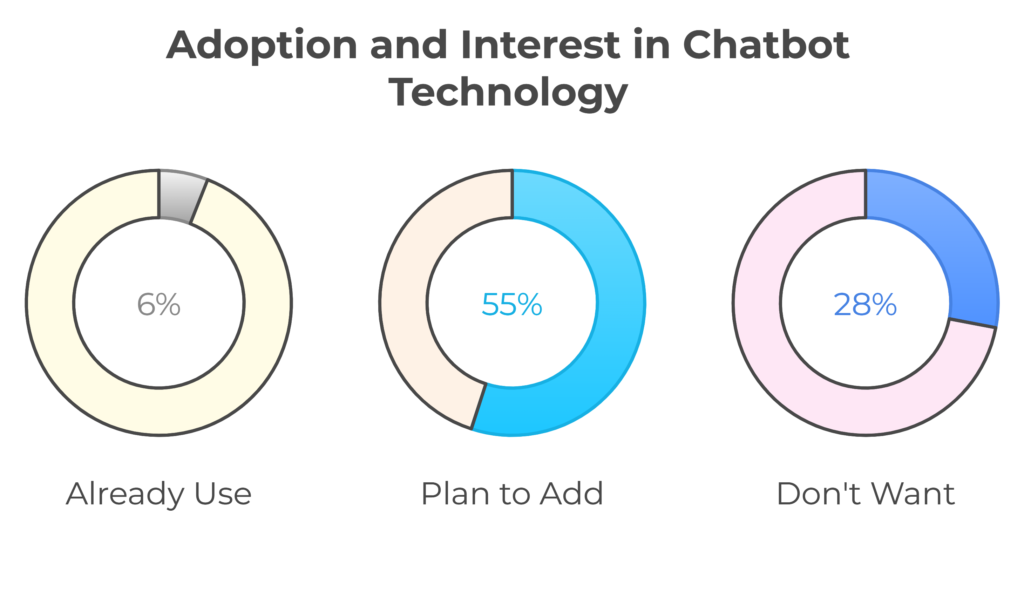
28% of businesses do not want a chatbot at all, while 55% plan to add it at some point.
2. 24% of businesses that use AI chatbots have excellent ROI.
3. 82% of users would rather use a chatbot than wait for a human agent.
4. A 5-minute delay in response increases the risk of site visitors leaving by 10x. (Conversation Trends, 2024)
5. A 10-minute delay in response increased the risk of site visitors leaving by a whopping 100x. (Conversation Trends, 2024)
While this doesn’t seem to show an overt preference for chatbots, but more likely a dislike towards long waiting times.
6. 60% of business owners believe that AI chatbots can help enhance their customers’ experience. (Tidio, 2024)
7. 19% of businesses want to use chatbots for 24/7 availability. (Tidio, 2024)
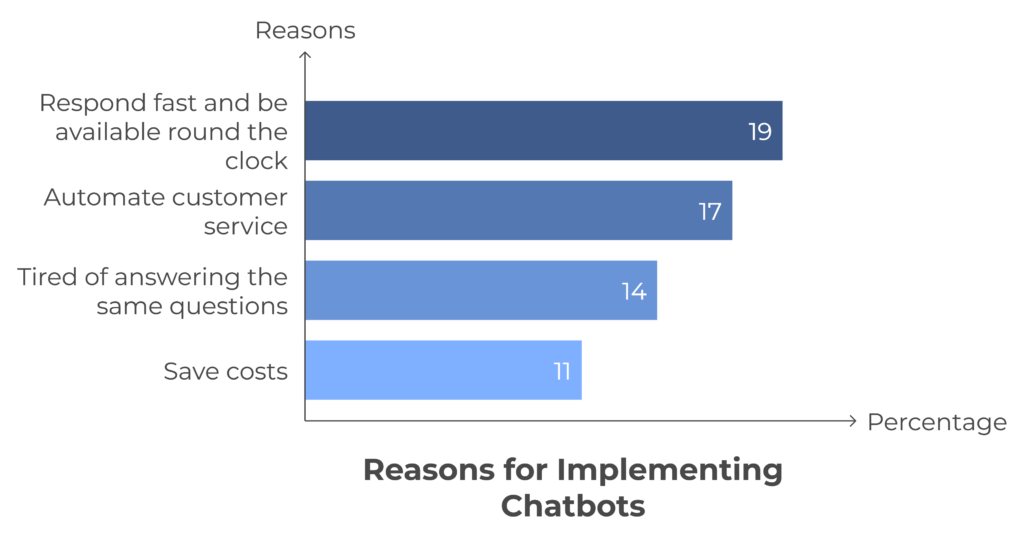
Here are some of the other problems they have faced:
- 19% needed to respond quickly and stay available 24/7
- 17% would have liked to automate customer service tasks
- 14% got tired of answering the same questions repeatedly and would like an AI to do that
- 11% wanted to reduce costs
How Effective Are Chatbots?
Findings in the global chatbot market show that chatbots save businesses from a lot of expenditure.
8. The global chatbot market is projected to grow at a rate of 23.3% each year from 2023 to 2030. (Grand View Research, 2023)
80% of consumers report recent use of some kind of AI-assisted tools
9. 46% of customers require only one or two bad experiences to leave. (Vonage, 2024)
10. 74% of customers are likely to take their business elsewhere after a bad experience. (Vonage, 2024)
11. The adoption of chatbots across sectors will realize business cost savings of $11 billion annually by 2023. (Juniper Research, 2023)
Statistics on Customer Expectations and Preferences From Chatbots
Chatbots can vary in use- from entertainment purposes to even potentially offering short-term mental health support.
37% of Americans Have Used Chatbots Because They Thought It Would Be Fun
According to statistics curated by Consumer Reports, a significant amount of Americans find their chatbot conversations entertaining.
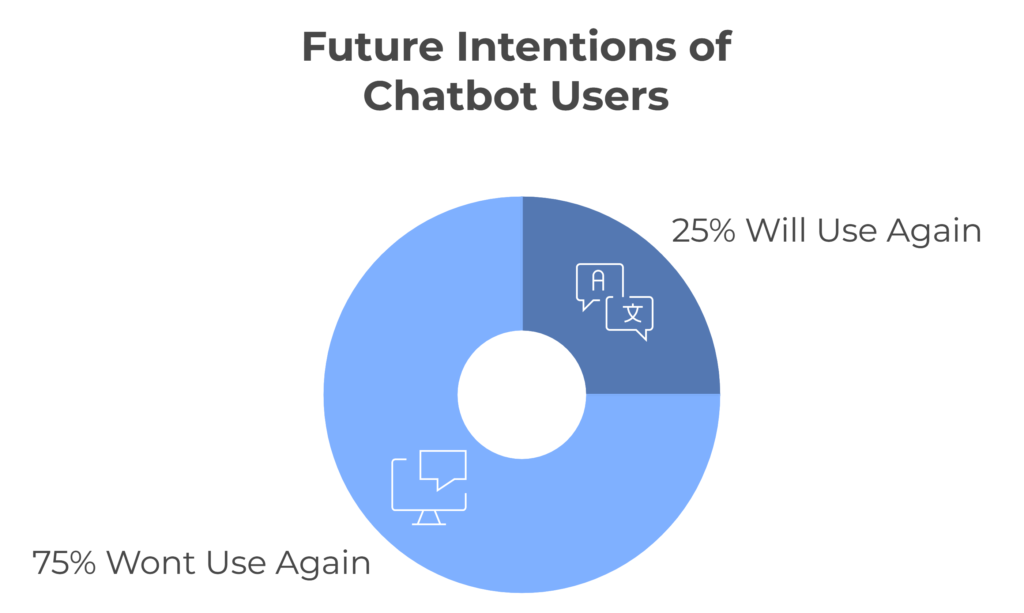
12. Only 8% of customers recently used a chatbot in business interactions. (Gartner, 2023)
13. Of those, only 25% said they would use the chatbot again in the future. (Gartner, 2023)
14. Research shows that AI chatbots can be useful for mental health support. (NCBI
15. From 2022 to 2023, the number of requests to speak to human agents increased by 2.5x. (Conversation Trends, 2024)
People still want their customer interactions to be with human agents instead of conversational AI.
16. 50% of people have concerns about using artificial intelligence. (Tidio, 2024)
AI Chatbot Statistics
We are currently in the era of advanced AI chatbots, how is the American public generally coping with that?
Let’s find out!
20% of Americans Have Used an AI Chat or Text Program in the Past Month
Let’s look at some more stats on how Americans’ interaction with AI chatbots, via Consumer Reports:
17. In August 2023, a third of Americans said they had used an AI chatbot in the past three months.
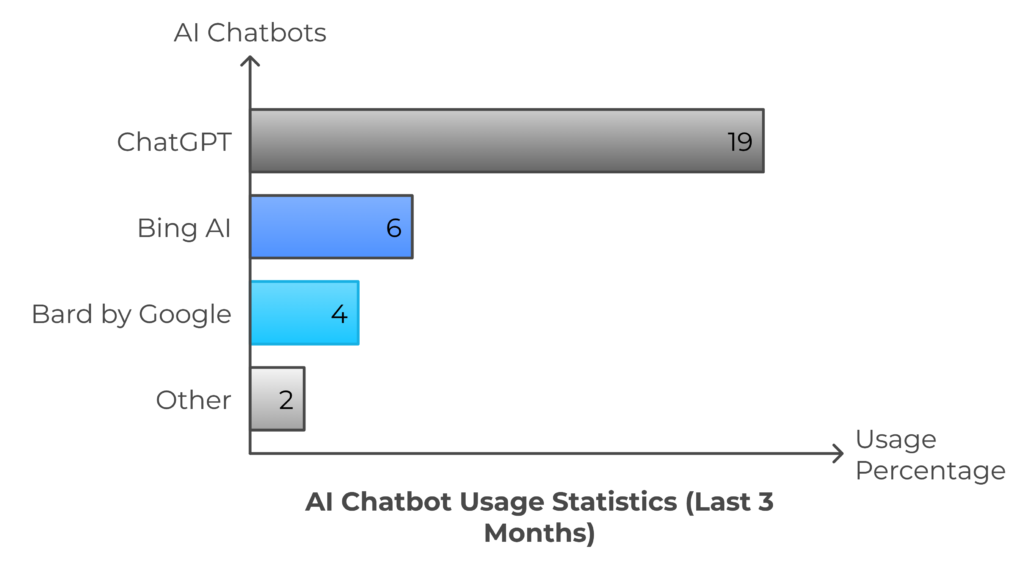
18. 35% say they use an AI chatbot instead of a search engine to answer a question.
19. 23% of Americans who had used an AI chatbot in the last three months used it to help them accomplish a writing-related task.
20. 14% had used live chat software for entertainment.
How Do Customers Feel About AI Chatbots?
According to Vonage’s Global Customer Report, the results are mixed with around 60% having a very positive or somewhat positive stance.
Let’s find out what customers are telling us with some more chatbot stats:
21. 26% are very positive about AI being used in chatbots.
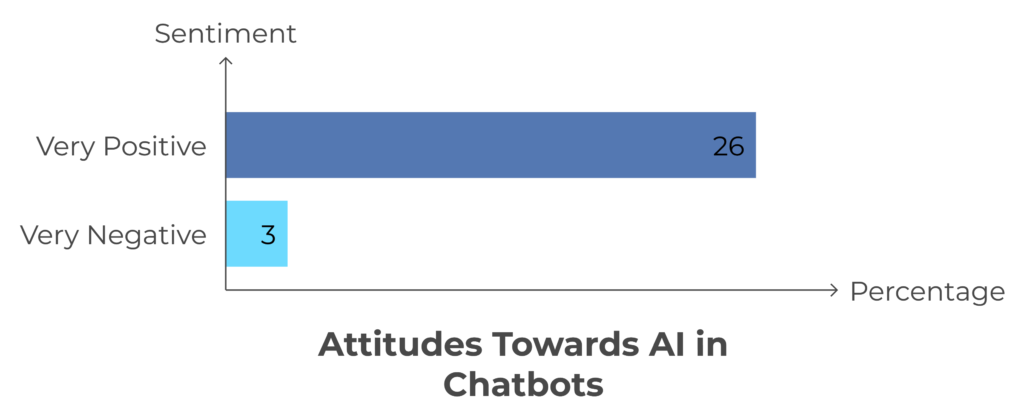
Around 3% are very negative about using them.
22. Most consumers have mostly positive or neutral feelings towards AI being used in chatbots.
23. 80% of consumers report recent use of some kind of AI-assisted tools.
Customers are very quick to abandon a service or product from a business after even one or two negative experiences.
24. 46% of customers require only one or two bad experiences with a business’s customer experience to leave.
25. 74% of customers will likely take their business elsewhere after a bad experience.
Are AI Chatbots Safe?
There are very valid concerns regarding sharing vulnerable information with chatbots, as there is no encryption most of the time.
There also have been cases of hackers using LLMs for their malicious purposes.
26. Highly skilled cybercriminals could exfiltrate information from or inject contaminated data into the large language models (LLMs) that train GenAI. (FS-ISAC, 2024)
Customers expect the information that they have shared during their chatbot interactions to not be shared or even stored by the parent company.
27. 45% of Americans do not want chatbot companies to store their health information. (Consumer Reports, 2024)
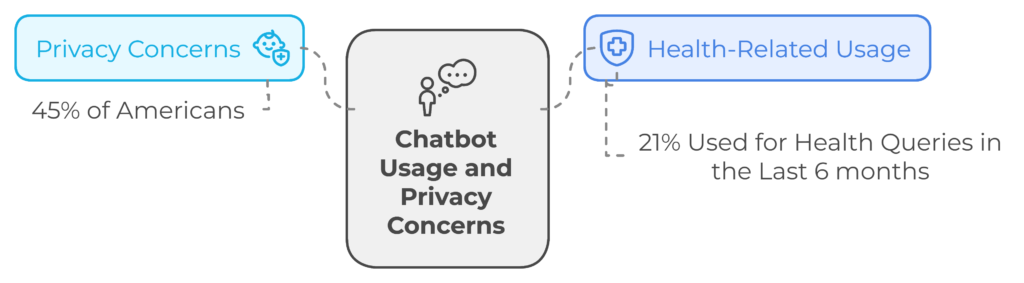
Do people use ChatGPT like they use Google to search for health-related issues or diagnose their symptoms?
28. In the last 6 months, around 21% used a chatbot to address a health query of theirs. (Consumer Reports, 2023)
Facebook Announced That Its Bot Platform Has Been Used to Create 300,000 Bots
Facebook messenger is one of the most used social media text platforms.
29. According to Venture Beat, Facebook, one of the world’s most popular messaging apps, has created 300000 AI bots to interact with clients.
30. Although the Facebook spokesperson declined to give the exact number of bots being used in small businesses, they said customers exchanged 8 billion messages on Facebook Messenger daily.
31. ChatGPT and Character AI collectively accounted for a 37% download share in the top 30 AI chatbot apps category. (Sensor Tower, 2023)
Chat with Ask AI is the number 1 chatbot.
32. Chat with Ask AI is the most popular chatbot, with most of its revenue relying heavily on paid downloads. (Sensor Tower, 2023)
Statistics on Chatbot Challenges
Broadly, here are some of the main challenges that chatbots face in the current market.
In General, 90% of Organizations With AI Are Cutting Costs and Improving the Customer Experience
This is according to a report by Salesforce, that also says the vast majority of service professionals think AI will improve customer satisfaction.
First off, the human element that comes when dealing with human voice agents is quite important to customers, and virtual agents don’t hold up.
Here are some more AI chatbot stats by Ipsos:
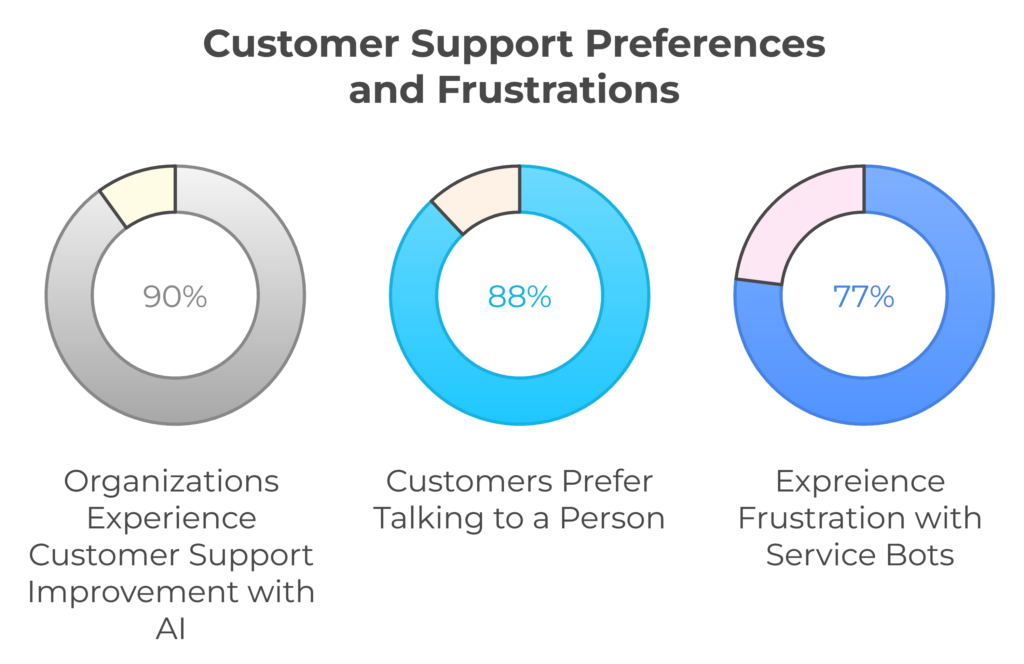
34. 77% of people find customer service bots frustrating to deal with.
35. AI bots have also been known to show bias based on the customer’s demographics, instead of engaging with their own preferences.
Customer privacy is a very important topic as well, especially if customers confide personal information with a chatbot.
36. Data breaches are escalating as well, with 422.1 million people affected by data breaches in 2022.
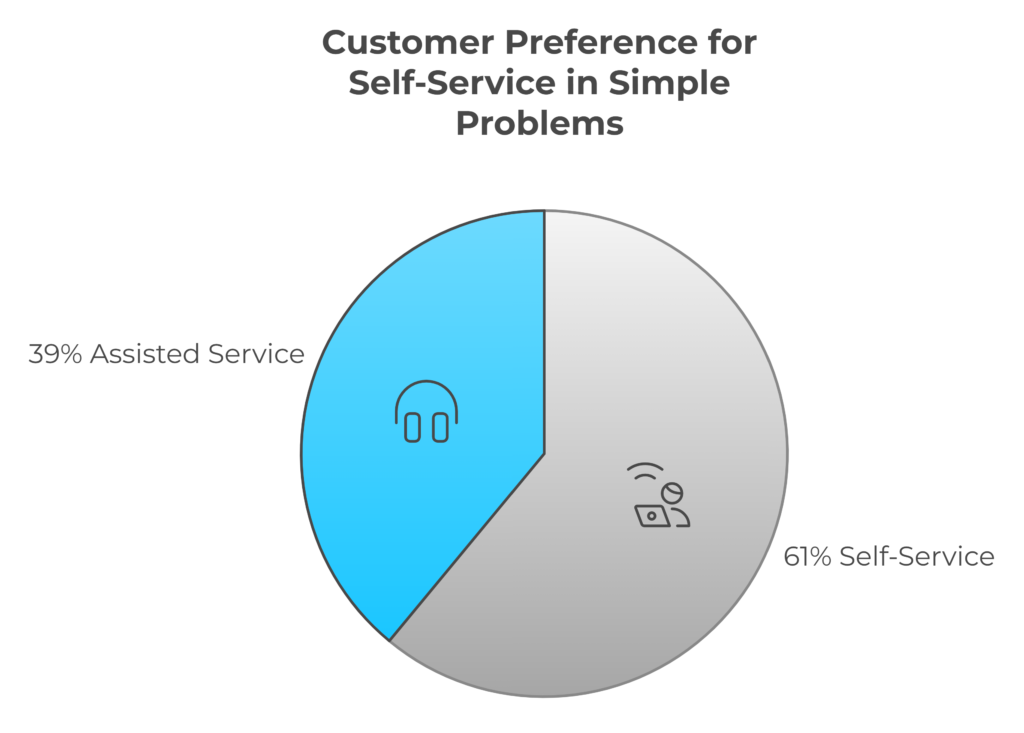
Other challenges include customers having a preference for independence and self-service.
37. For simple problems, 61% of customers prefer self-service. (Salesforce, 2023)
Customer expectations are also rising with the times.
38. 89% of service professionals also cite rising customer expectations as a concern. (Salesforce, 2023)
So What’s The Future of Chatbots?
The future for AI Chatbots generally looks positive.
39. Gartner predicts that by 2027, AI chatbots will be the primary customer service channel for 25% of businesses.
Investments into chatbot companies also seem to be increasing-
40. According to Financial Times, the leading chatbot company Character.AI has got a $2.7 billion deal from Google to improve its customer products.

About the author
Editorial Staff
The Editorial Staff at Bot Memo is a team of writers, analysts, and AI agents dedicated to mapping the global AI startup ecosystem. Led by Chintan Zalani, the team tracks thousands of funding rounds, classifies companies across verticals, and distills it all into actionable intelligence for investors and founders.