


Generative AI tools such as ChatGPT and Midjourney are creating novel design ideas and templates for designers to use.
How are designers adapting to these new changes in the industry?
Let’s find out more with curated AI design statistics.
On this page
- Key Generative AI in Design Statistics: Editor’s Choice
- Is There a Rise in Demand For AI Design?
- The Global Generative AI in Design Market Size Is Estimated to Reach $16,893.37 Million by 2035
- 66% of Creatives Professionals Said AI Tools Are Helping Them Make Better Quality Content
- How Does the Design Industry View AI?
- How Do Web Designers Use AI?
- What AI Systems Do Designers Use The Most?
- 9 Out of 10 Artists Believe Current Copyright Laws Are Outdated
- 74% of Artists Consider AI Scraping Artwork From The Internet as Unethical
- Is the AI Design Market Experiencing AI Fatigue?
- AI Adoption Challenges in The Design Industry
- Final Thoughts: How Will Designers Use Artificial Intelligence in The Future?
Key Generative AI in Design Statistics: Editor’s Choice
1. The global generative AI in the design market is estimated to reach $16,893.37 million by 2035.
2. 69% of professionals think generative AI will empower them to express their creativity in new ways
3. 66% of creative professionals said AI powered tools are helping them create better-quality content
4. 65% of respondents in a UX tools survey were already using AI in their work.
5. Although, 72% of those who have integrated AI into products said it didn’t make much of a difference
Is There a Rise in Demand For AI Design?
Here’s a Google Trends graph to depict how AI Design has shot up in demand over the last couple of years:
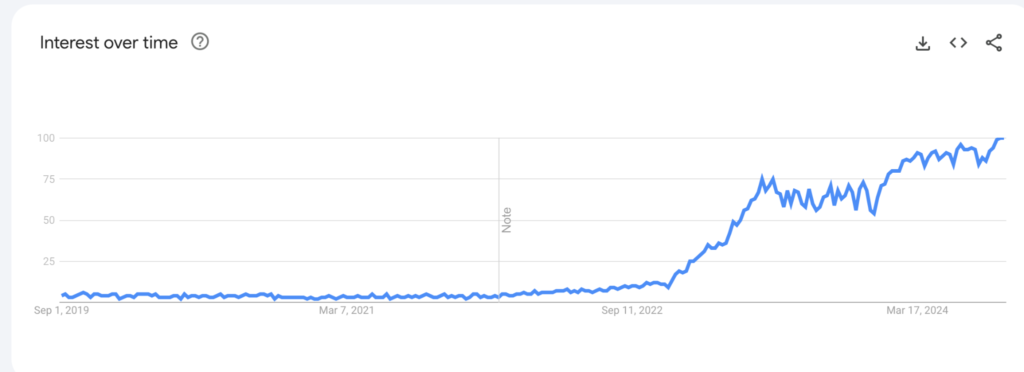
Some related queries that have shot up in demand include:
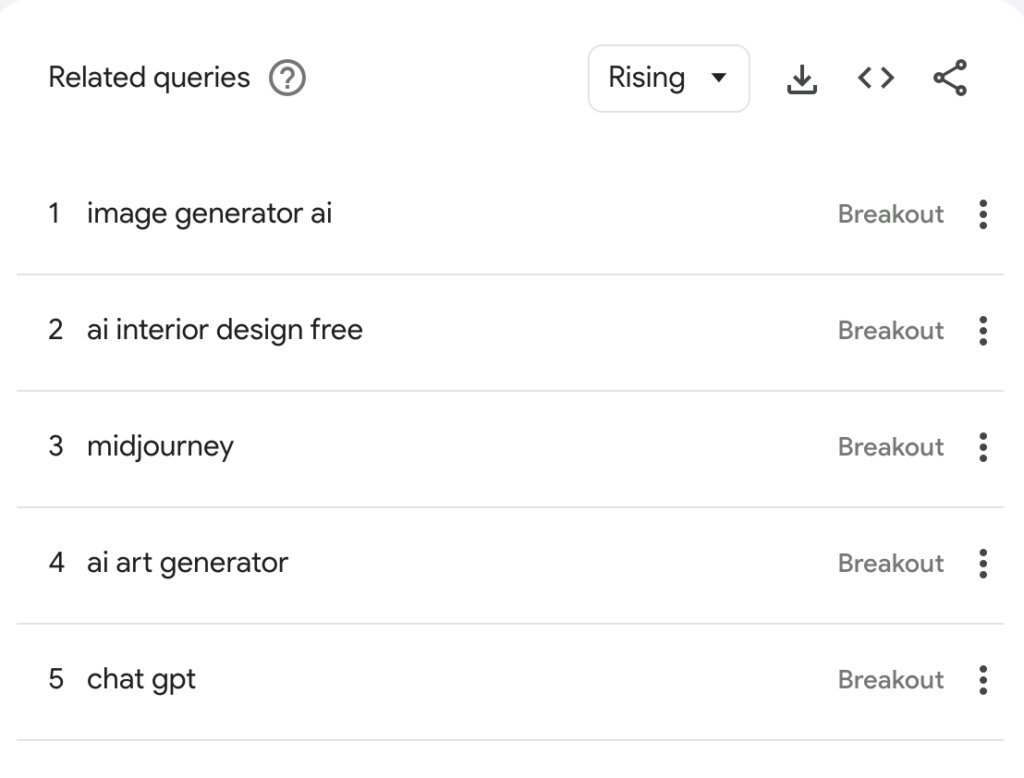
They are,
- Image Generator AI
- AI interior design free
- Midjourney
- AI art generator
- ChatGPT
The Global Generative AI in Design Market Size Is Estimated to Reach $16,893.37 Million by 2035
During the forecast period of 2026-2035, this global ai market is expected to have significant growth at a CAGR of 32.75%.
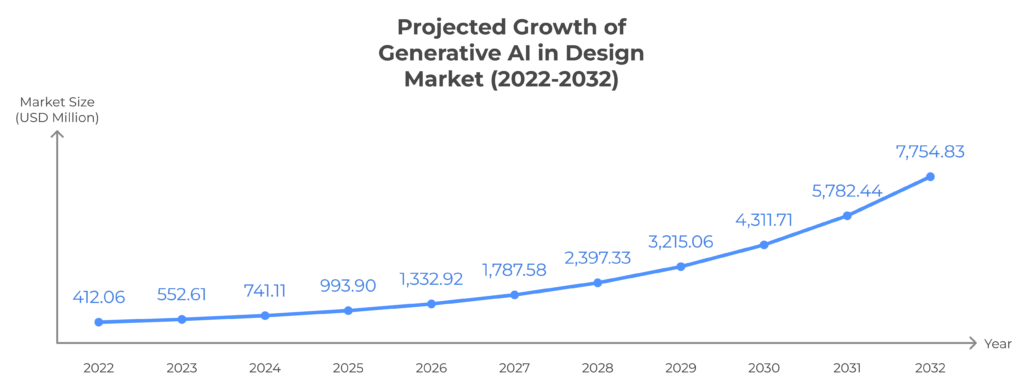
Here are some more interesting findings from Precedence Research:
North America Generated More Than 40% of Revenue Share in 2022
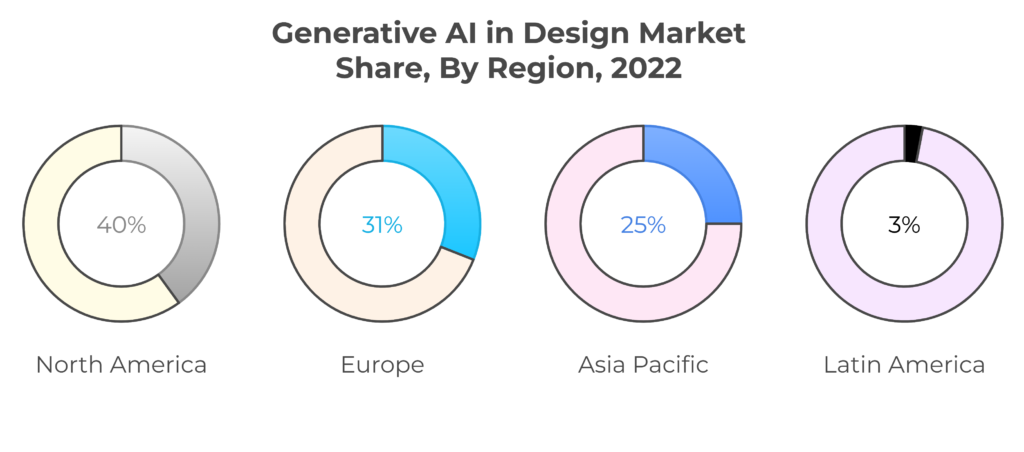
North America leads again with 40% of the market share, followed by Europe at 31% and then Asia Pacific at 25%.
Large Enterprises Make Up 47% of the End-Users Market Share
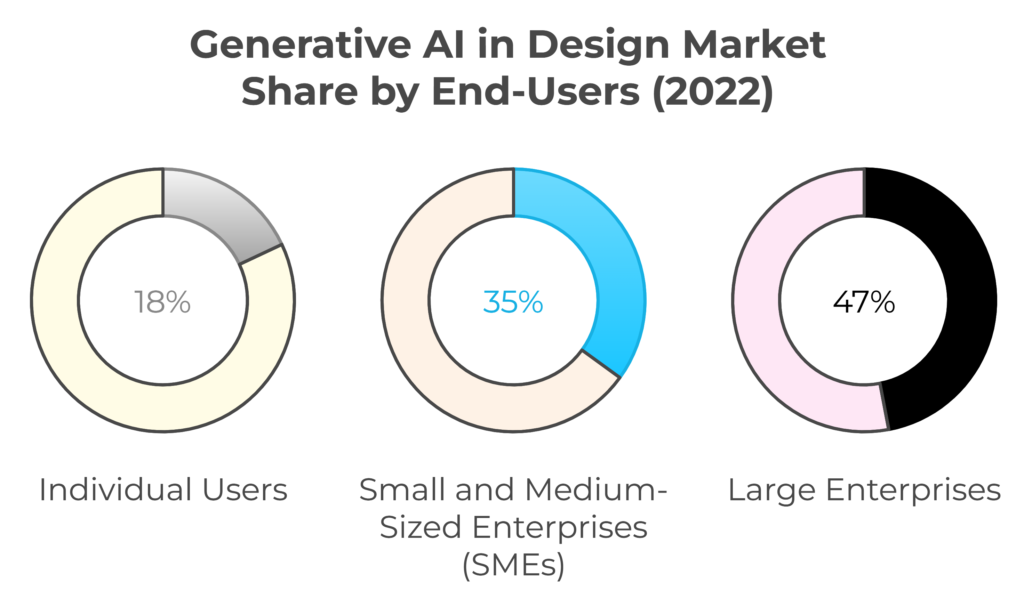
Small or medium-sized enterprises come next at 35%, with individual users at 18%.
66% of Creatives Professionals Said AI Tools Are Helping Them Make Better Quality Content
Another 58% have also said that they’ve increased the quantity of content they create. (Adobe, 2024)
83% of Creative Professionals Say That They Use Gen AI Tools in Their Work
For 20 of them, their companies or clients actually require them to use generative AI in their work. (Adobe, 2024)
69% of Professionals Think Generative AI Will Empower Them to Express Their Creativity in New Ways
Creative professionals are one of Adobe’s core audiences, and they maintain that using AI helps them save more time for work they enjoy. (Adobe, 2024)
Apart from work, 74% of them are also using Gen AI in their personal lives.
For Product Design, The Content Created by AI Is More Precise than That Produced by Humans
Generative AI can be effective for product design as it can predict errors that go into designing the product before it is finalized.
How Does the Design Industry View AI?
A lot of human designers are already incorporating AI into their work, their primary tool was ChatGPT.
Let’s look at a survey from UX tools that goes into detail about this.
65% Of Respondents in a UX Tools Survey Were Already Using AI in Their Work
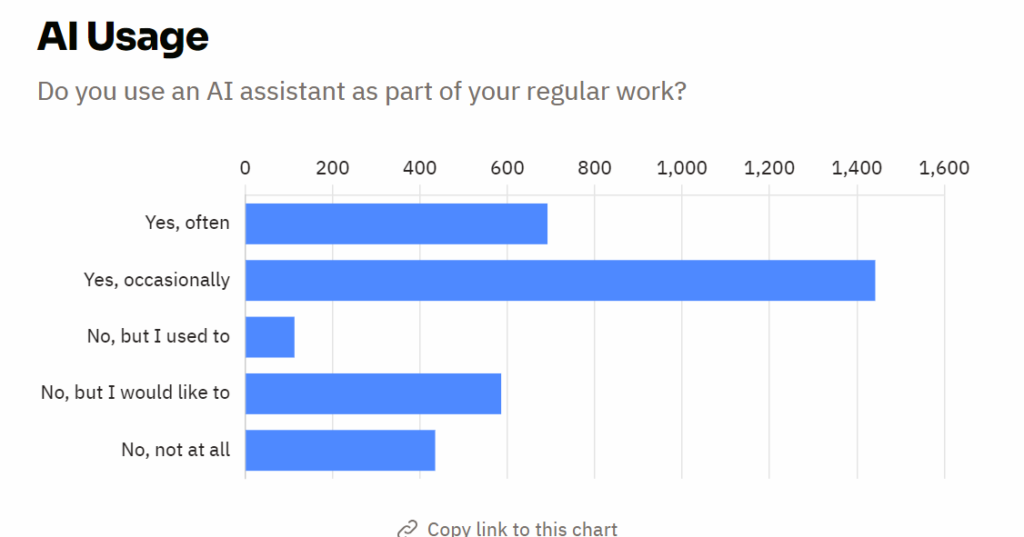
While 13% of respondents were not interested in using AI.
The Primary AI Tool Used by 84% of Surveyed Designers Was ChatGPT
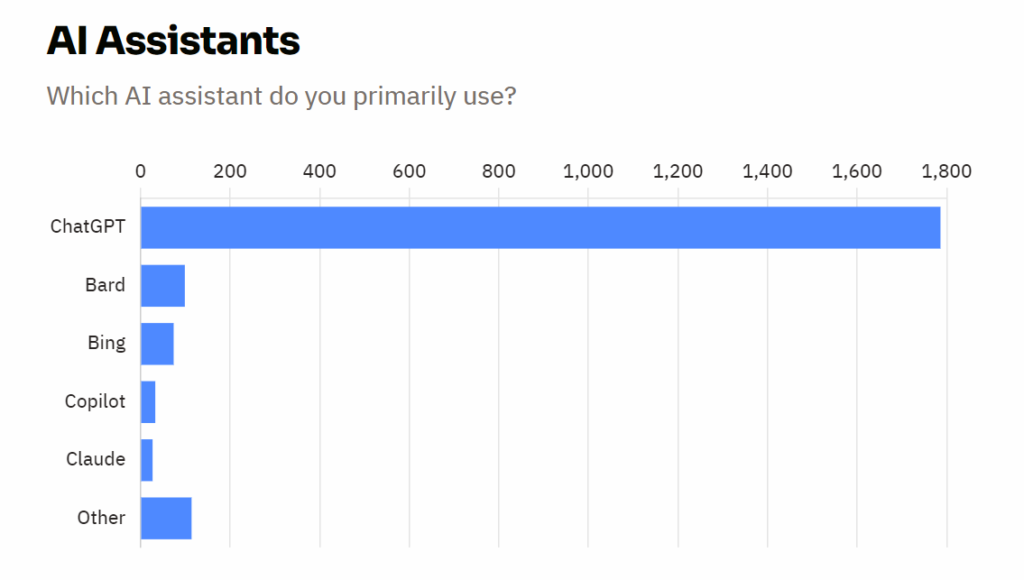
The ‘Other’ in the graphic denotes technologies like Midjourney, Firefly, etc.
41% of Respondents Feel Very Confident About AI Tools
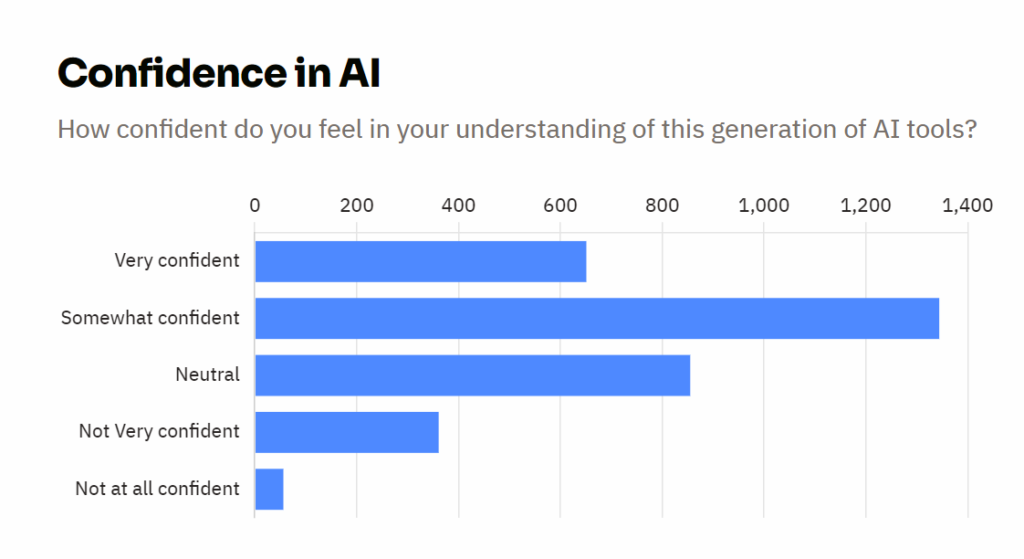
Not everyone who felt confident about AI tools used them in their work, though.
Here is a chart on AI usage across multiple categories:
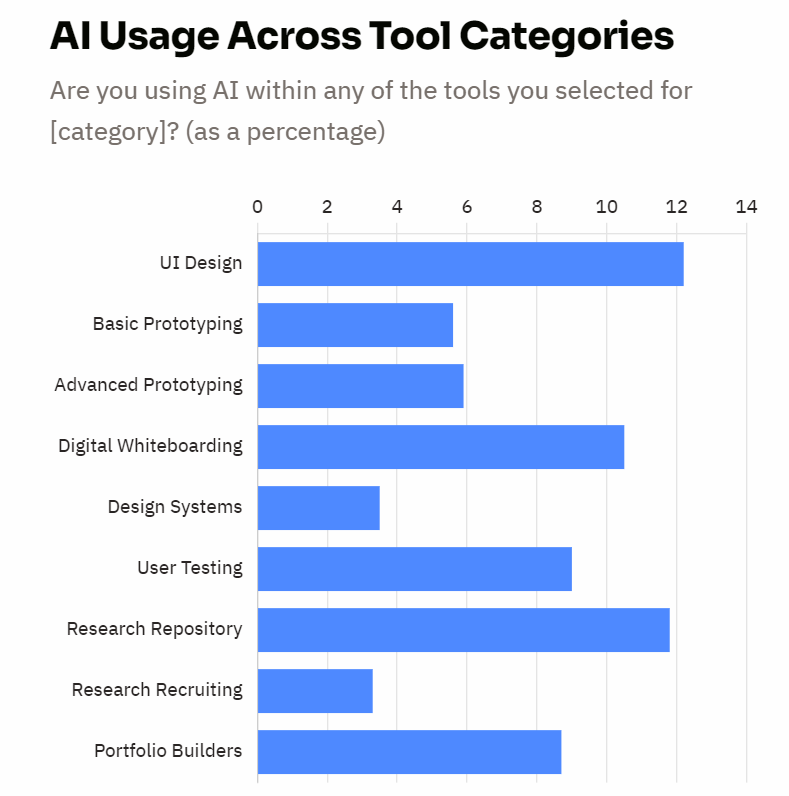
The highest category was UI Design, at around 12%.
38% of Respondents Say AI Speeds Up the Design Process
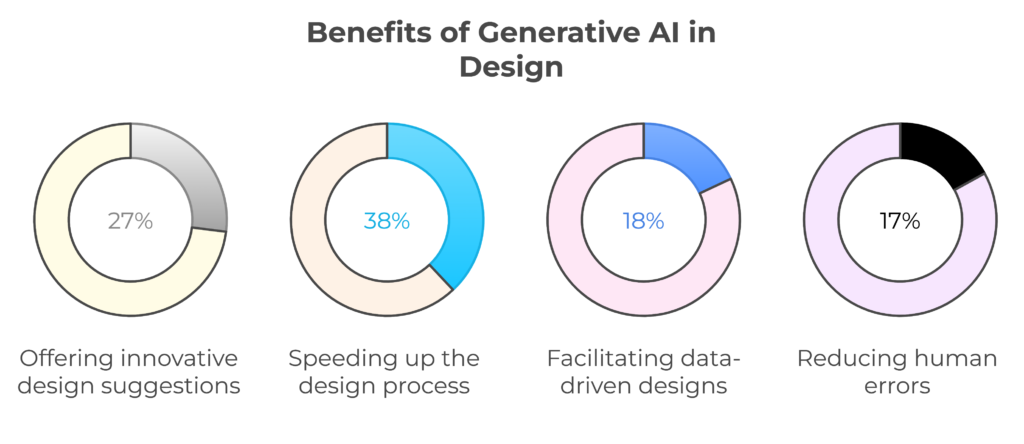
Another 18% say that it can also come up with data-driven designs. (Procreator, 2024)
27% Believe AI Offers Innovative Design Suggestions
Meanwhile, 17% believe AI reduces human error. (Procreator, 2024)
88% Would Trust AI For Predicting Design Trends
This forecast would be based on user behavior and data analytics. (Procreator, 2024)
AI can bridge the gap between idea and iteration leading to a lot of Time saving. More time equals more exploration, more explorations lead to more outcomes, and more tech enhances the overall fraternity.
-Senior Designer at HDFC Bank.
In summary, design teams are advised to embrace AI systems, as they are innovative and enhance the quality of the final product.
How Do Web Designers Use AI?
According to research by HubSpot, web designers are prolifically using AI in their work.
Let’s look at some of their AI statistics:
93% of Web Designers Have Used AI Tools
This is within the duration of the last three months from when the survey was created.
So how are they using AI?
58% of Designers Use AI to Generate Imagery
50% use it to complete their web page designs.
49% Use It to Experiment With New Design Strategies
43% also use AI to enhance their existing designs.
40% Also Use AI to Measure Performance or Assess the Quality of the Design
When it comes to policies around how AI is used in the workplace, here’s what the designers surveyed said:
55% of Designers Said That Their Workplace Encourages the Use of AI Platforms
12% also say that there aren’t any policies around how AI is used in web design.
16% Selectively Encourage AI Tools Depending on the Tasks Used
Depending on the area for web design, some guidelines are there to prevent AI from being used there.
10% Discourage the Use of AI in Web Design
While 8% are unsure if there are any AI policies in place.
What AI Systems Do Designers Use The Most?
Here is a Weavely survey that lists the most popular tools that designers have reported using:
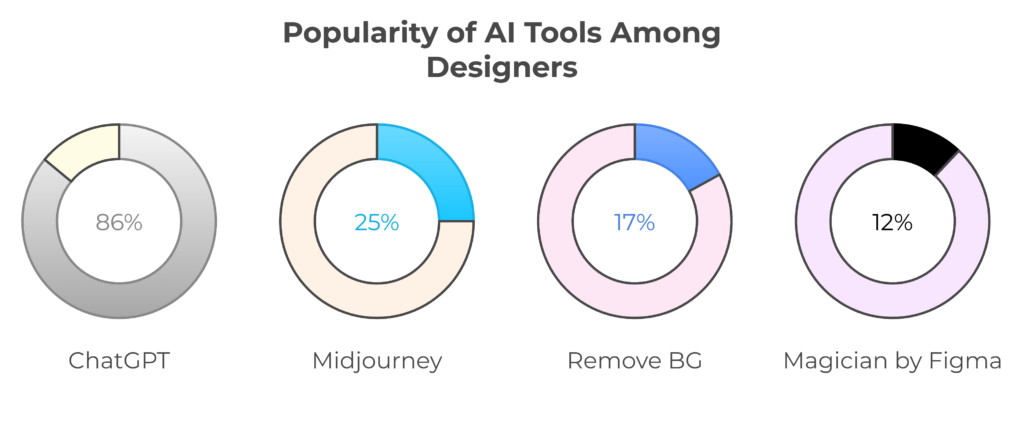
- ChatGPT is the most popular tool, with an astounding 86% of designers reporting using it
- The second is Midjourney with 25%, an AI image generator that has unique beautiful styles
- Remove BG comes at 17%, a tool to remove backgrounds from pictures
- At 12% is Magician by Figma, an AI tool for those who use Figma
- Creatie is a tool for those who use UX/UI, used by 9% of respondents
Do designers pay for design tools?
Only 42% of Designers Pay for Design Tools
Premium AI tools seem to have a value that’s worth investing in.
9 Out of 10 Artists Believe Current Copyright Laws Are Outdated
According to Book an Artist, artists don’t think these laws make sense with the current changing landscape of technology.
62% of Artists Believed It’s Their Responsibility to Protect Their Artwork
Although 52% believed that AI organizations such as OpenAI and Midjourney, should also take responsibility for protecting their artwork.
74% of Artists Consider AI Scraping Artwork From The Internet as Unethical
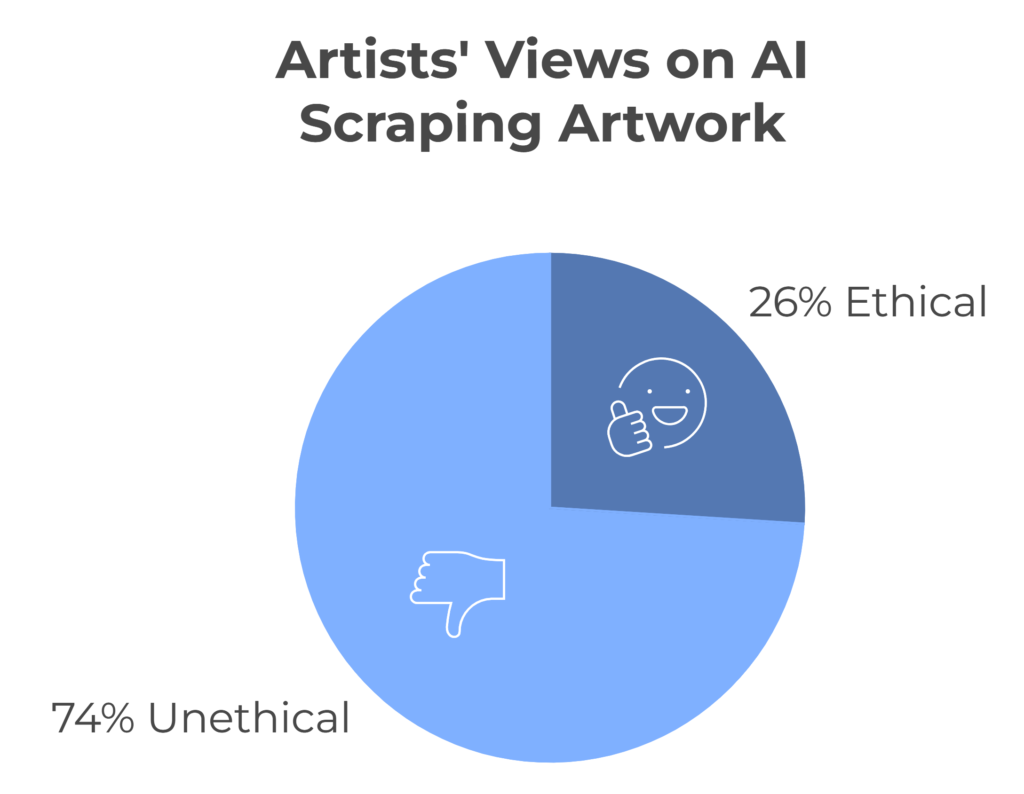
While 26% say that it is alright to do so.
Over Half of Artists Fear Negative Impact on Income From Generative AI Technology
Artists are worried about their ability to generate income in the future, with the rise of generative AIs like Midjourney.
Artists Call for Clearer Copyright Laws and Compensation for AI-Generated Artwork
72.6% want to be compensated, and another 53.5% want to be credited when AI is using their work.
An Algorithm Designed 7 Million Unique Labels for Nutella
All 7 million of these designs hit the shelves and were sold, you can see these designs on YouTube. (Futurism, 2017)
Is the AI Design Market Experiencing AI Fatigue?
The AI hype doesn’t seem to translate into better productivity for designers, according to a new survey from Figma:
Less Than 50% of Respondents Working on AI Products Have Shipped Their Product
This points to a general vibe that the market is saturated with AI and might be tired of it.
Fewer Than a Third of Respondents Are Proud of What They’ve Shipped
Although one-third of those surveyed did mention how AI made improvements to metrics like revenue, costs, or market share.
72% of Those Who Have Integrated AI Into Products Said It Didn’t Make Much of a Difference
Many surveyed said it’s too early to say whether AI is beneficial or not.
AI Adoption Challenges in The Design Industry
AI has quite a significantly high adopting rate by creatives in the U.S., and is preferred by the younger generation.
Average Global Generative AI Adoption Rates for Creatives Are 70-75%
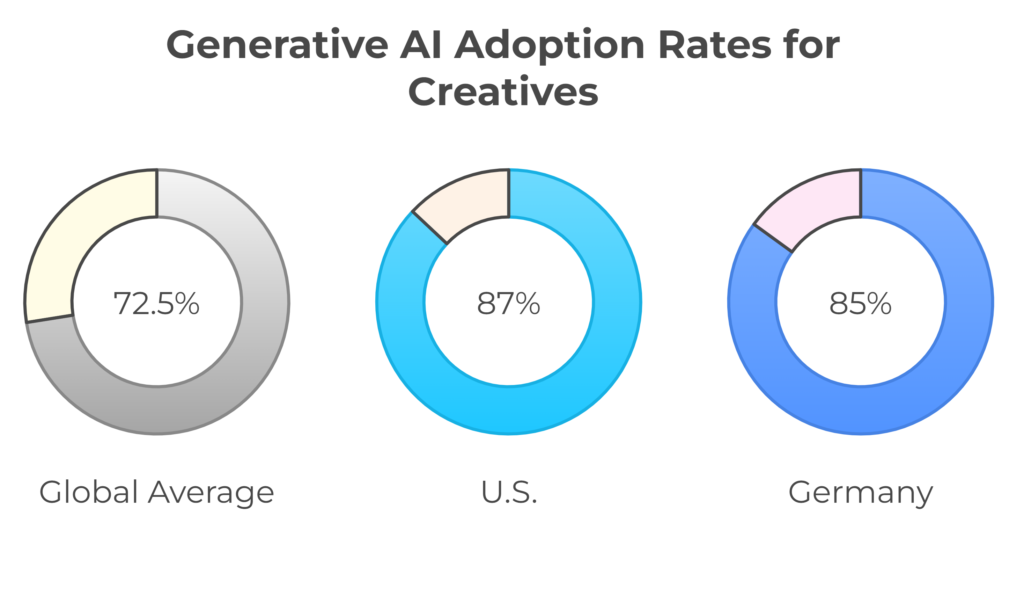
By region, the U.S. is the most likely to adopt AI at 87%, followed by Germany at 85%. (Adobe, 2024)
Gen Z(U.S based) Has the Highest Demographic AI Adoption Rate at 94%
Millennials in the U.S. come second with around 92%. (Adobe, 2024)
24% of AI Design Workers Cite Budget Challenges as an Impediment to Adopting AI
57% said that AI if implemented, would be a beneficial force in the design industry. (Procreator, 2024)
Lack of Skilled Professionals Impedes Wider Adoption of AI
Experts in AI are necessary to use AI tools properly, and lack of skilled experience is a problem for many industries thinking of adopting AI. (Precedence Research, 2024)
Final Thoughts: How Will Designers Use Artificial Intelligence in The Future?
Procreator has some valuable insights on how AI will impact the future of design:
49% Think That AI Could Either Enhance or Replace Various Tasks Depending on Its Use Case
44% think AI will improve the existing capabilities of designers.
Only 3% Think AI Risks Replacing Certain Design Roles
While another 4% remain unsure.
“The question of replacement is tricky and no one truly knows the answer,” says graphic designer Will Peterson.
Regardless of this, he continues, designers need to embrace AI’s potential to stay competitive in the job market today.

About the author
Editorial Staff
The Editorial Staff at Bot Memo is a team of writers, analysts, and AI agents dedicated to mapping the global AI startup ecosystem. Led by Chintan Zalani, the team tracks thousands of funding rounds, classifies companies across verticals, and distills it all into actionable intelligence for investors and founders.